

Testing and Development
We've spent over 5 years rigorously testing and iteratively improving our pads alongside OEMs, Tier Manufacturers and Development Drivers. Tribol brake pads are tested above and beyond industry requirements, and outperform the industry standard ECE R90 regulations.
How We Test
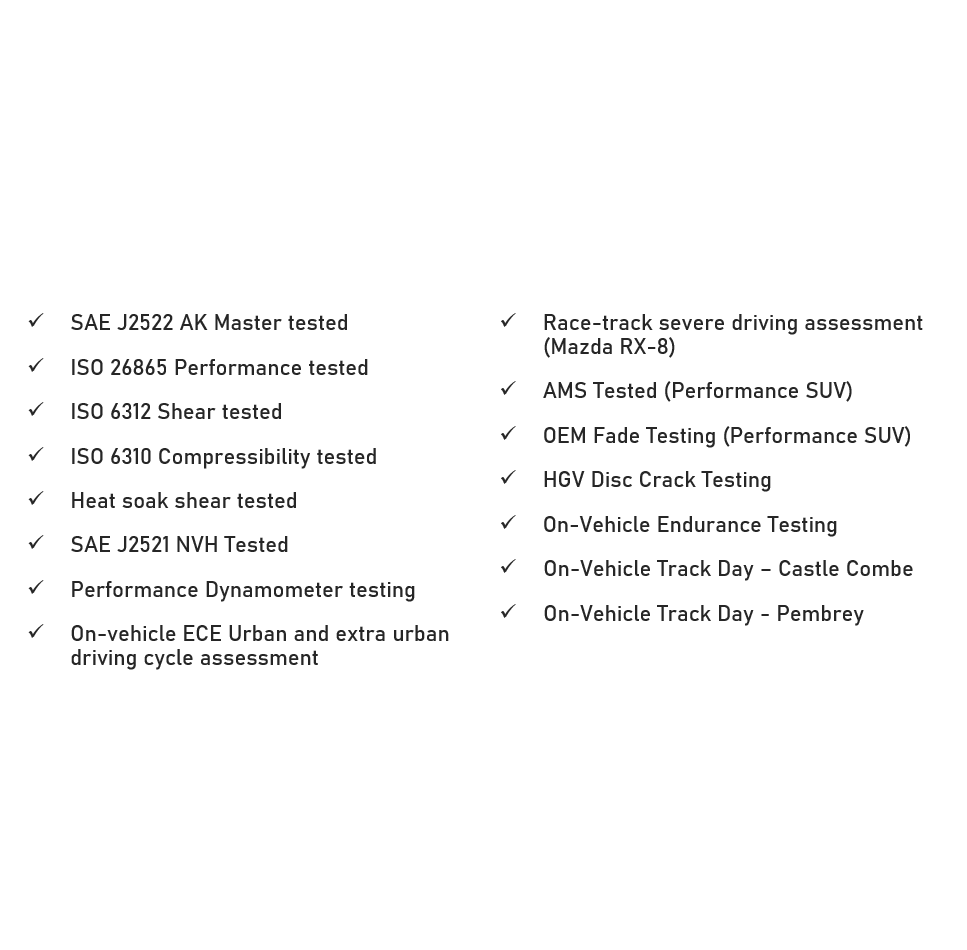
During our development cycle, Tribol has tested our pads on everything from mountain bikes, to 18t trucks, to F3 cars.
On the right you can see a list of some of the various tests we've performed over the years, and as you read on, you'll learn a little more about the specific motorsport focussed testing that has been performed.
On a more serious note, there is a good reason we have chosen to have our pads moulded by a respected Tier Manufacturer in the UK with whom we have worked for over a decade on other projects - they wouldn't be moulding for us if they didn't believe in its performance.
So why don't we have the R90 symbol?
Tribol test beyond R90 standards for the track
As a safety critical item, you'd expect brake pads to be heavily regulated to ensure performance in every scenario - but this is only partially true. While every aftermarket road pad in Europe must conform to the ECE R90 Regulations, they do not account for high performace upgrade parts, rather they ensure the pad mirrors the OEM pad performance.
For most motorsport formats, no official performance regulations exist. Approval for use is reliant on the pads meeting the internal standards of the pad manufacturer themselves - but rest assured, these are in fact far higher than R90 regulations!
This regulation system, coupled with other similar regulations in America and Asia, stipulates that replacement parts perform within a +/- 15% window when compared to their OEM counterpart across a range of tests. This actually means most high performance motorsport pads cannot obtain this regulation, due to their being too good compared to the OE part!
While based on the same testing regime and ISO Standard as the ECE R90 tests, OEM specification typically includes testing well above and beyond the R90 suite of testing, including endurance testing into the 100,000's of cycles, extremely detailed testing to assess and prevent brake squeal and judder, and extreme thermal destruction testing to fully understand how the friction compound behaves in every scenario.
Rather than being focussed on performance, FIA Homologation is typically a control to ensure manufacturing quality for hardware such as calipers and racing seats. As a consumable item, brake pads typically sit outside of FIA Homologation.
Top end racing formats may have "control pad" stipulations, but these are often either to prevent unfair advantage in stock racing formats, or simply a marketing ploy for large pad manufacturers!
Internal standards are again based on the same ISO Standard as the R90 regulations, but often with the pass criteria being at least doubled to ensure performance. On top of this, manufacturers will develop their own specialised dynamic test programmes to mimic the harshest use case scenarios their pads will ever be subjected to.
Critical Tests
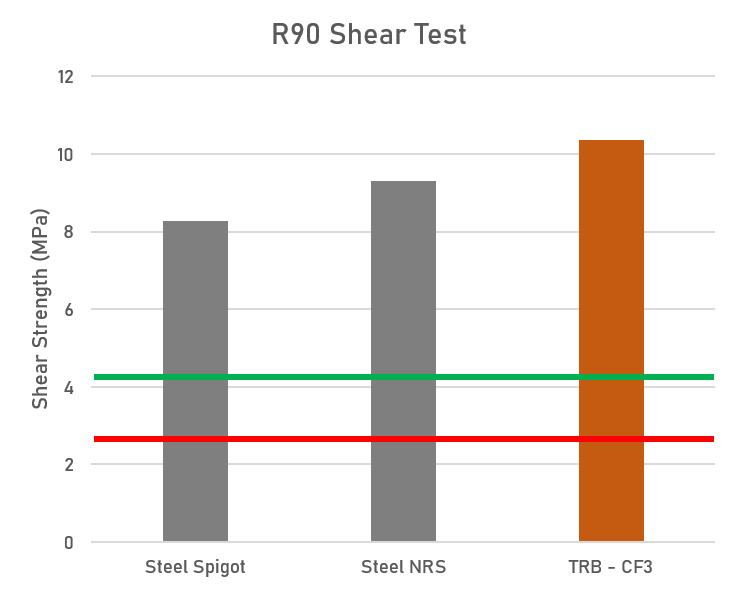
ISO 6312 Shear Test - ECE R90
Shear testing is about how well your compound sticks to your backplate, and therefore what braking force can be achieved without failure.
To test this, you simply try to break the compound from the pad, and measure the force required to do so. ECE R90 say you need to achieve a shear force of at least 2.65MPa, and that the failure should happen in the compound, not the at the boundary. Our pad manufacturer requires a shear force of 4.15MPa to pass their internal testing - but we've gotten as high as 10MPa, so, nothing to worry about there!
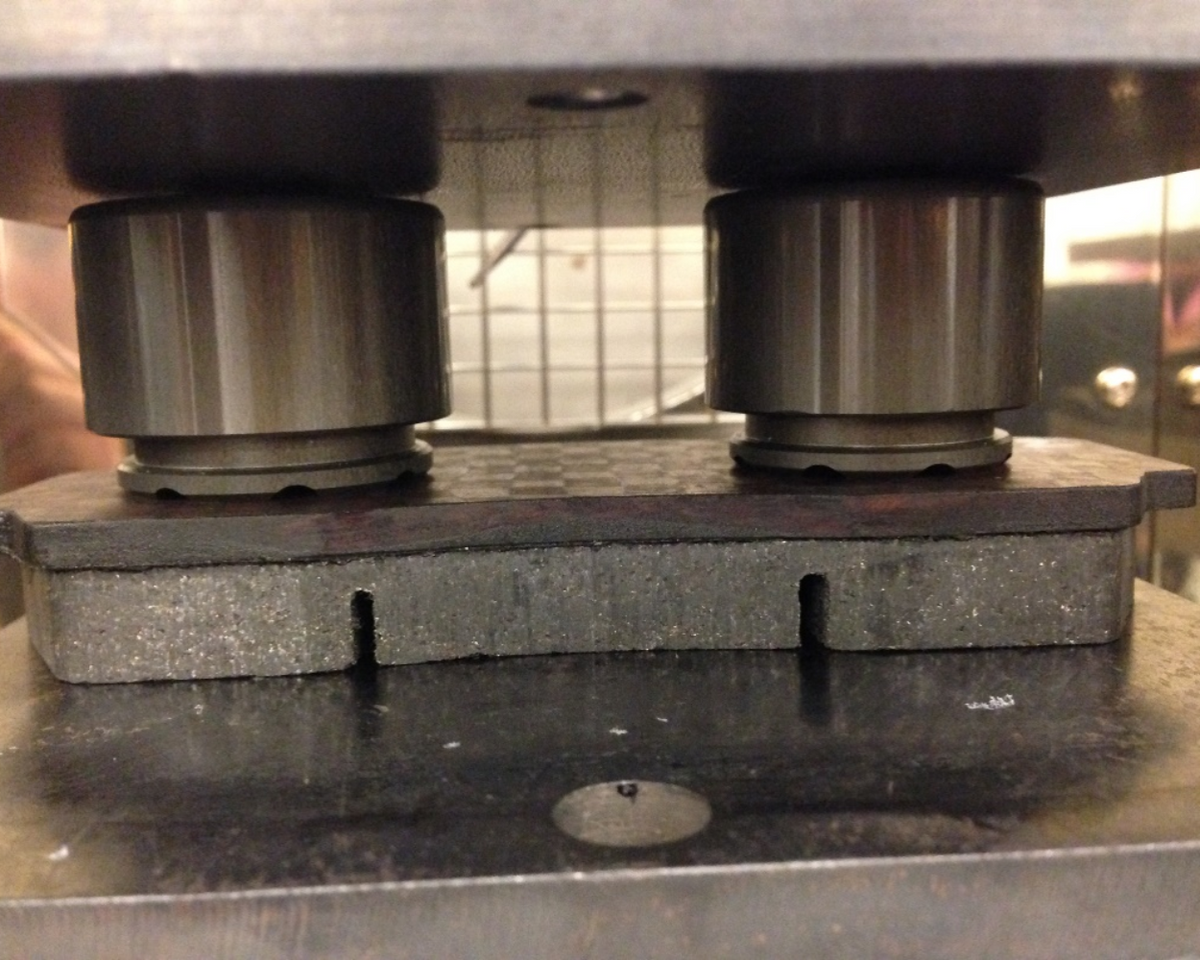
ISO 6310 Compressive Strain Test - ECE R90
Less important than shear, but critical to ensuring good pedal response and no hot-spotting, the compression test involves loading a pad with a piston and seeing how much it compresses under a certain load.
ECE R90 Maximum Limit: 0.32mm
Tribol ColdForge CF-3: 0.07mm
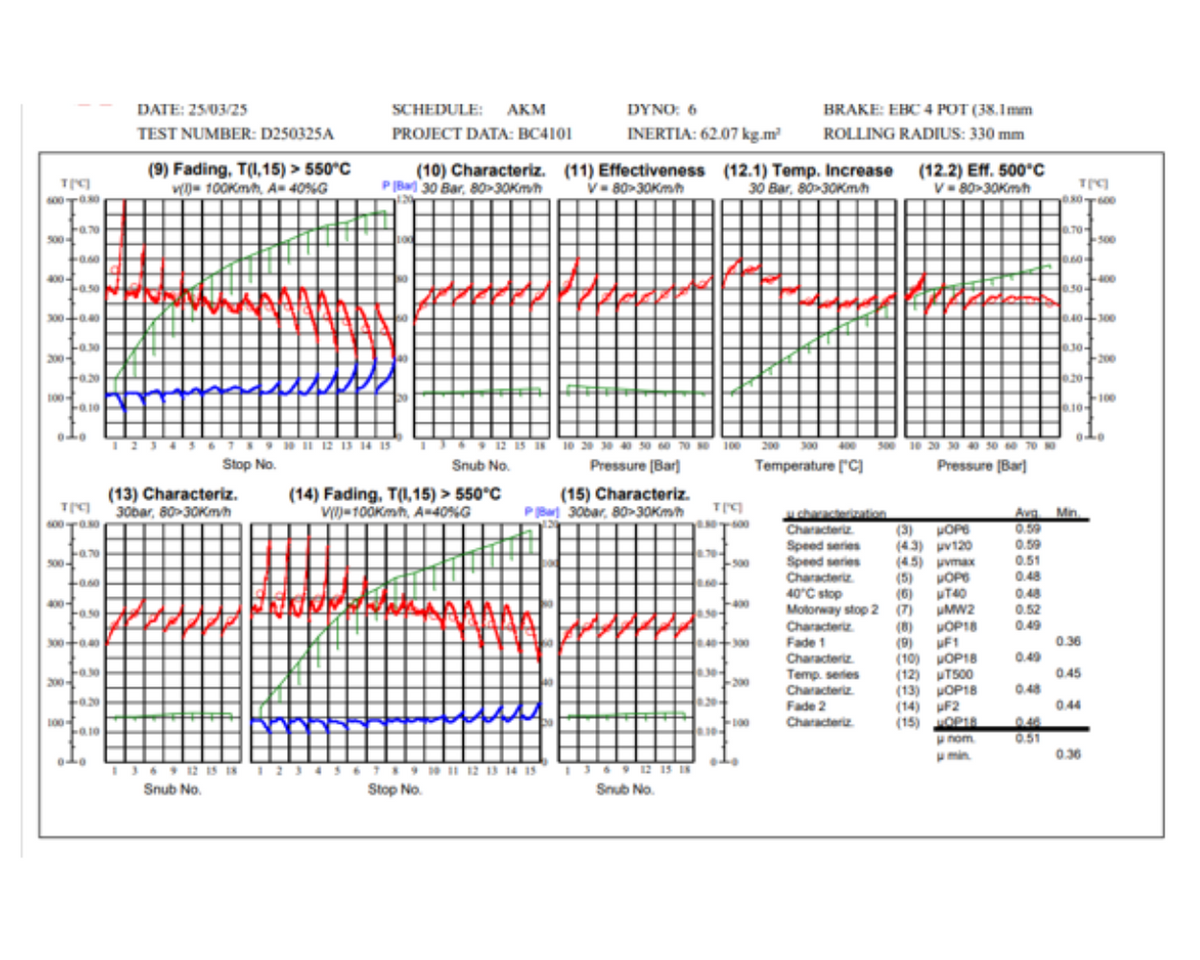
SAE J2522 AK Master - ECE R90
A dynamic test programme designed to simulate a wide range of everyday driving scenarios, this test is typically used to assess whether the pad sits within the 15% comparison window for an OEM equivalent. Needless to say, we overperformed - hence the pad being track only.
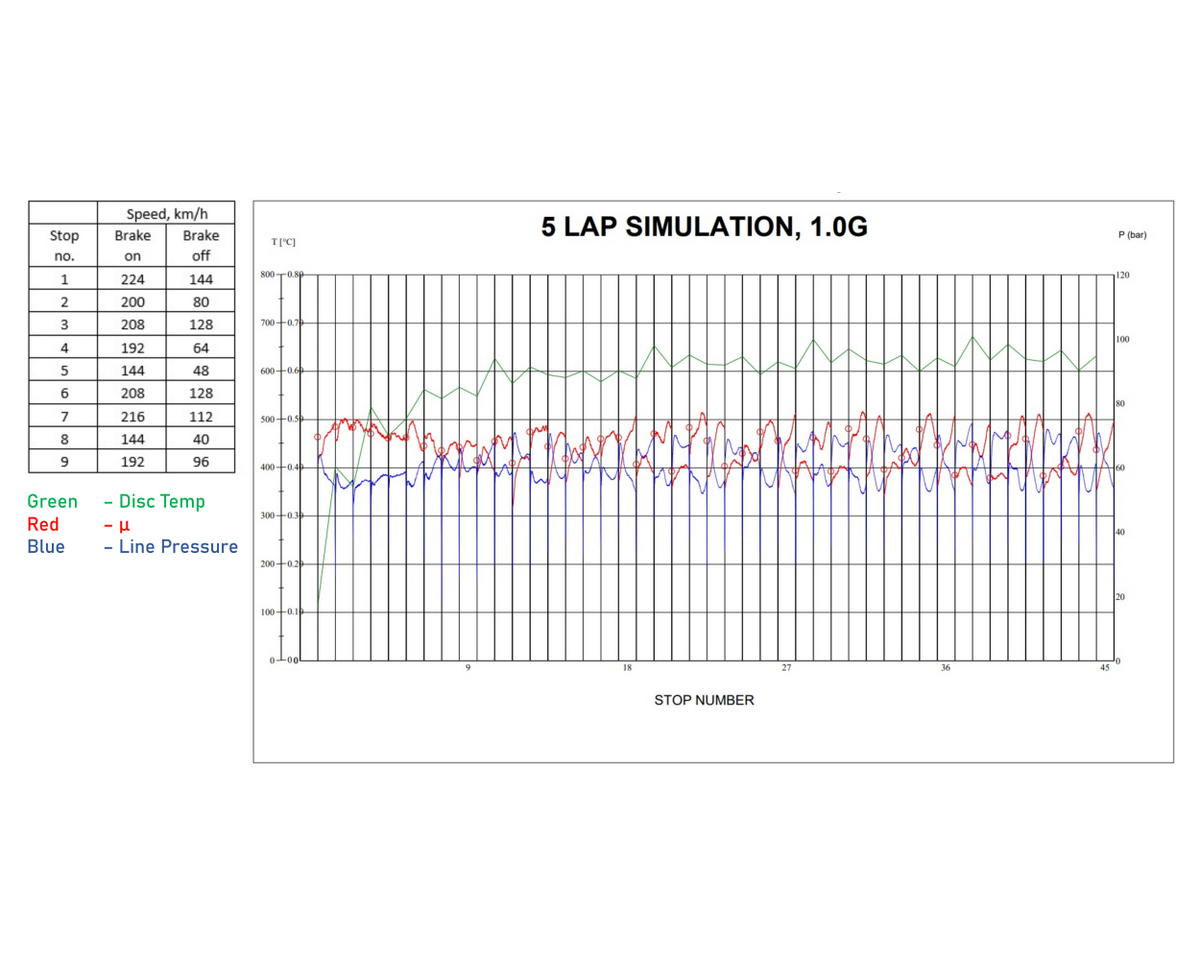
LapSim - Tier In-House Certification
One of our most commonly performed dynamic tests, the LapSim is a custom test programme performed by our pad manufacturer which has been used to prove their pad compounds for the last 20+ years. It gets the disc to over 650°C and holds it there for a series of 1g decelerations from over 150mph to simulate aggressive track driving
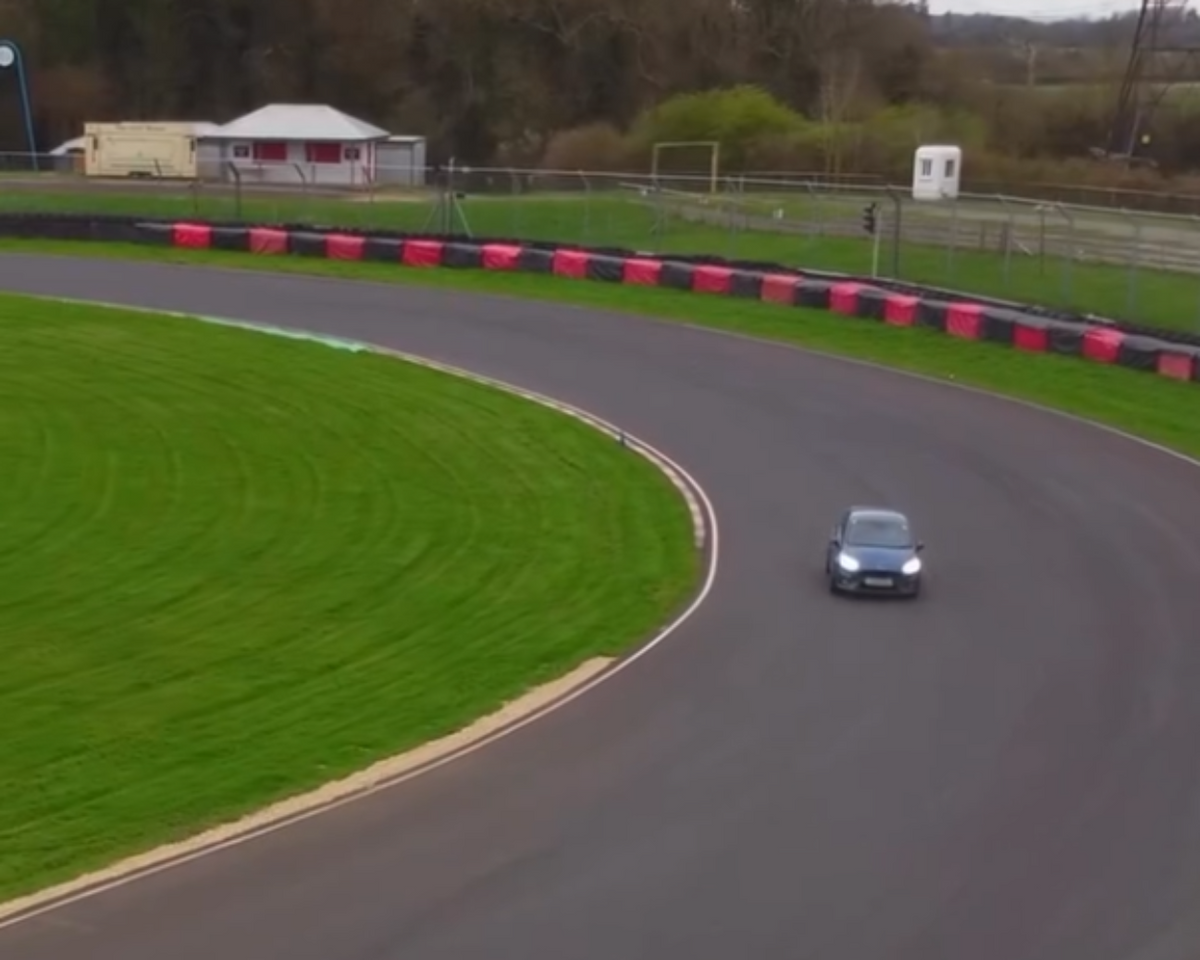
Castle Coombe - Track Testing
An early shakedown of our pads - Castle Combe is one of the more heavily braked circuits in the UK, with Quarry corner being infamous for its crash record. This testing highlighted some driver related attributes - particularly pedal feel, which we worked hard on for our next round of testing
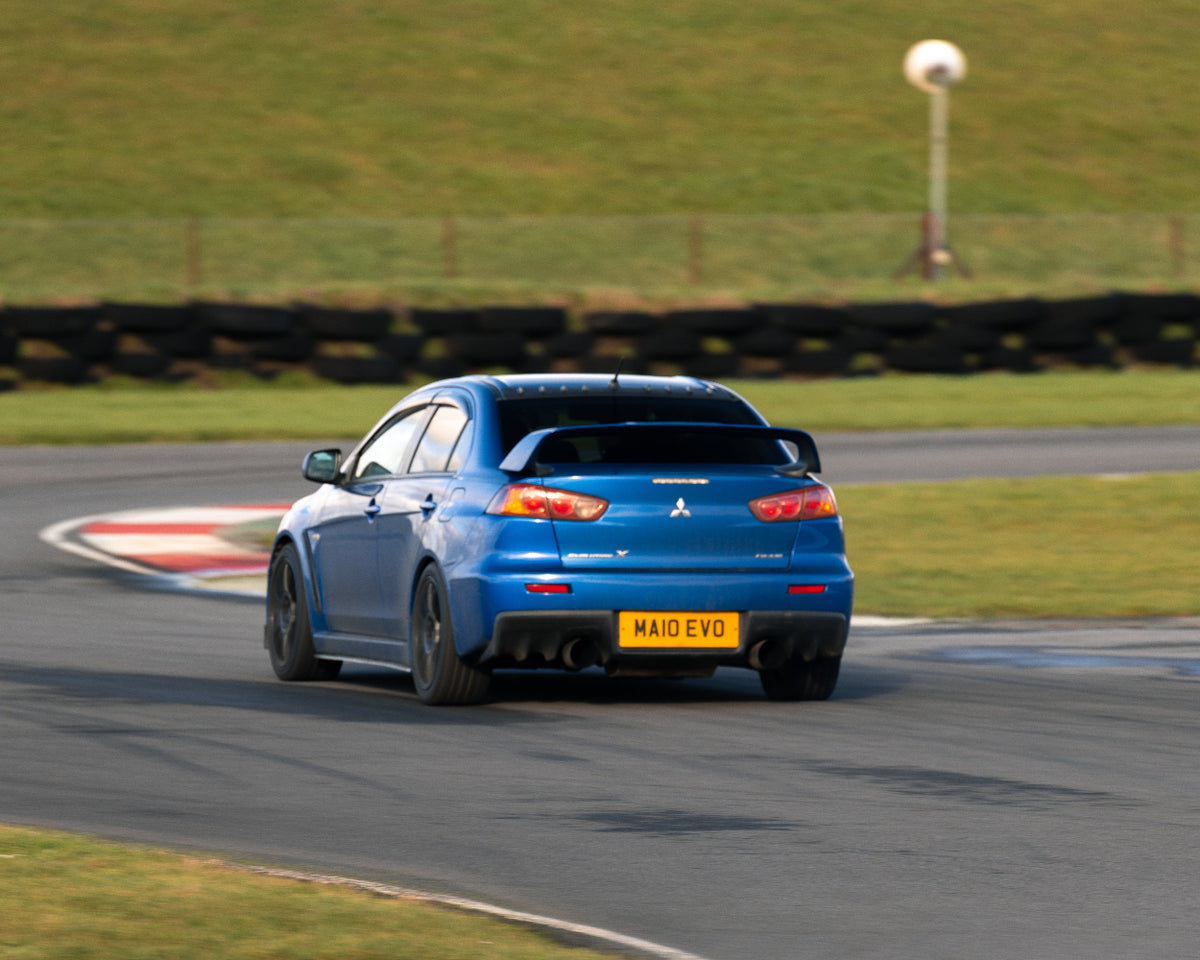
Pembrey Circuit - Track Testing
It might be a smaller circuit, but it can be tailored to really ramp up the temperatures on your brakes, and that's exactly what we did with four cars in early 2026, putting our final production level pads through their paces with great success - you can read more on our blog here