
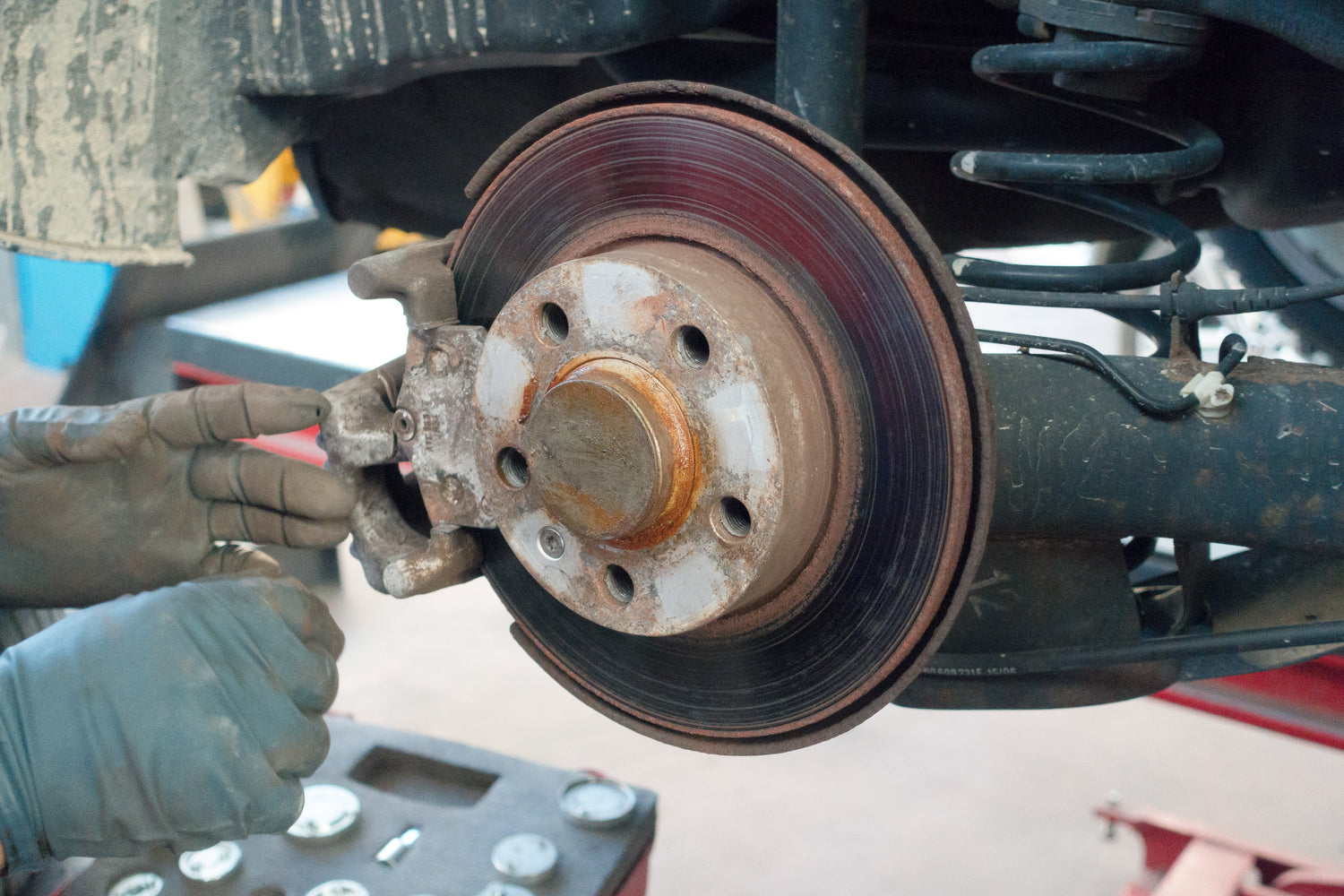
Brake pad corrosion in an issue that is commonly hidden and often unknown. Brake pads and especially backing plates have a very high metallic content which is susceptible to corrosion (rust) if exposed to water and oxygen for too long.
This is often not an issue in combustion vehicles due to the frequent use of brakes, removing any surface corrosion and removing moisture from the brake pad by the heat generated during friction.
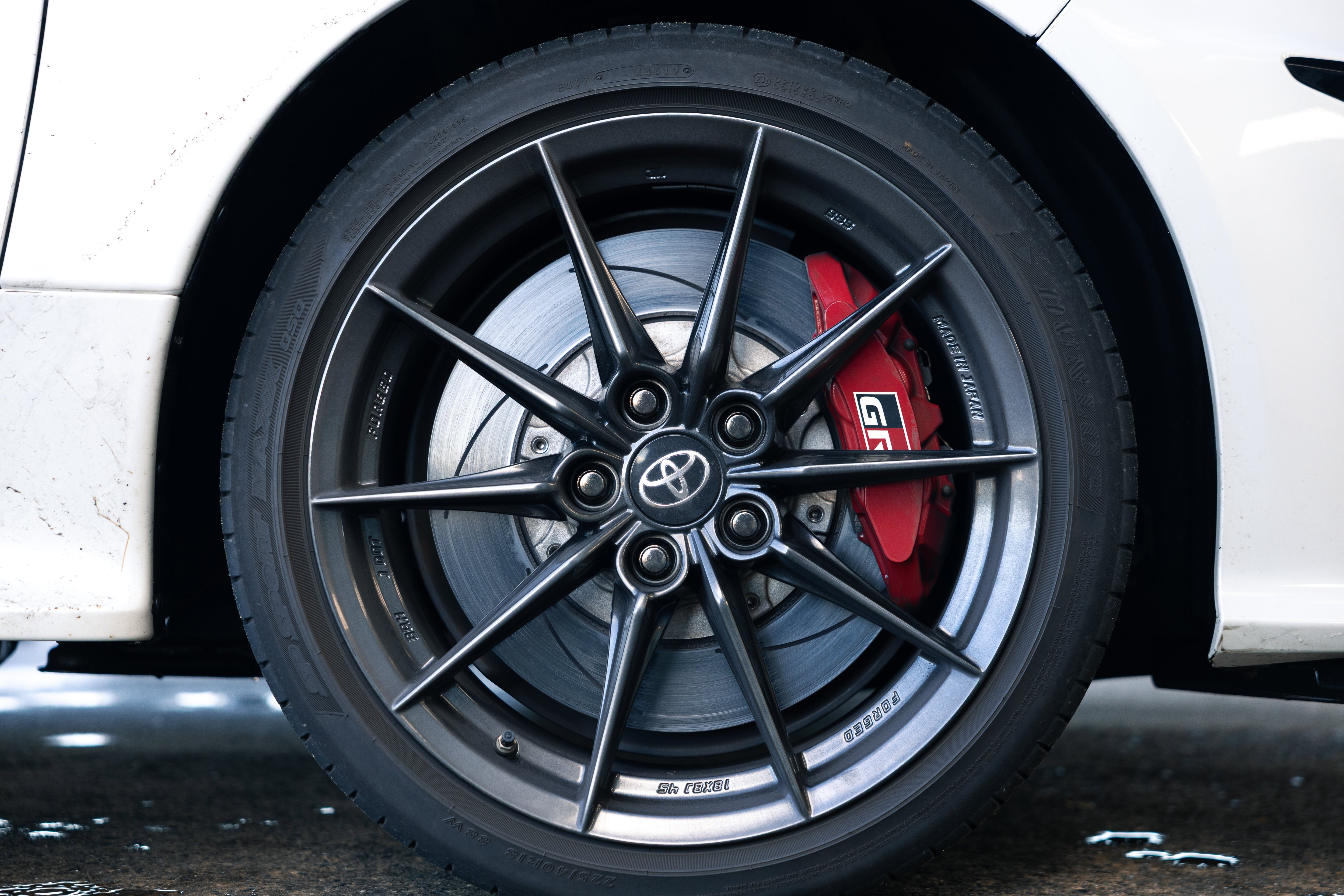
Electric vehicles, however, are focussed on regenerative braking, which depends on electrical resistance rather than friction. In fact, 95% of braking in everyday electric vehicles is now performed by the regenerative system, but conventional brakes remain essential for the last meter and, most importantly, emergency braking situations. On the face of it, this should be excellent news – less pad usage = less wear = less brake squeal and a lighter bill at your mechanic – however, the resurgence of corrosion induced pad failure means that has not turned out to be the case…

Corrosion within EV brake assemblies is a growing durability and cost challenge recognised at an OEM level, and it is predominantly due to the backplate. Brake pads currently consist of a friction compound that is mechanically fixed or chemically bonded to a mild steel backing plate. The backing plate is typically made from cheap carbon steel, which is highly susceptible to oxidation when exposed to water, de-icing salts, and oxygen. In corrosive environments, iron oxidation (rust) can expand to several times the volume of the original material, generating stresses that weaken and can break the bond between the friction material and the backing plate. Industry field studies have shown that corrosion-related brake service events can account for up to 30–40% of brake warranty claims in high-salt regions.
In internal combustion engine vehicles, frequent brake application produces sufficient frequent frictional heating (often 100–300°C at the pad) to remove surface moisture and mechanically abrade early-stage corrosion. By contrast, battery electric vehicles rely heavily on regenerative braking, where kinetic energy is recovered via the traction motor rather than being dissipated through friction. While this extends friction material life, it also reduces the self-cleaning and heating/drying effect that traditionally mitigates corrosion. Several fleet analyses have reported that EV brake pads may exhibit acceptable lining thickness at service intervals yet require replacement due to corrosion-induced degradation rather than wear.

The consequences of corrosion extend beyond cosmetic rotor rust. Oxidation at the pad backing plate can cause delamination of the friction puck, uneven pad loading, increased noise and vibration (NVH), calliper seizure due to corroded slide mechanisms, and in severe cases, loss of the friction compound. In northern European markets and parts of North America where road salt usage exceeds 10–20 million tons annually, corrosion-related brake maintenance costs in EV fleets have been reported to occur 1.5–2 times more frequently than in comparable combustion vehicles. As electrification increases and regenerative braking strategies become more aggressive, corrosion is the dominant life-limiting factor in brake systems rather than wear.

Solutions to this a wide ranging and expensive, from mechanically keying the steel backplate to galvanising, however, these processes are time consuming and can generate other challenges, such as chemical compatibility with aluminium calipers. Tribol’s solution is far more elegant – the use of a glass fibre backplate in an extremely corrosion resistant phenolic resin matrix all but eliminates backplate corrosion as a possibility, coupled with a moulded mechanical retention feature which guards against delamination cause by substantial thermal excursions. All this while also halving unsprung mass, helping combat NVH, and protecting your caliper…
About the Author
Edward Lewis
Project Engineer, Tribol Braking
Ed is a Project Engineer at Tribol Braking, contributing to the development, prototyping, manufacturing, testing and validation of composite backing plate brake pad technology. He graduated with First Class honours in Automotive Engineering from the University of the West of England, where his dissertation focused on battery design for a hybrid Formula Student vehicle, maintaining cell temperatures through thermal optimisation and coolant management.
Edward has experience as a vehicle and powertrain engineer, working with OEMs on GT4 race cars, restomods, continuation vehicles and IVA programmes. He has also contributed to the design of high-voltage powertrains for advanced hypercar applications, utilising innovative materials.

Leave a comment
All comments are moderated before being published.
This site is protected by hCaptcha and the hCaptcha Privacy Policy and Terms of Service apply.