
Everyday Driving
There are three basic variations when it comes to friction compounds – organic, semi-metallic and sintered. The vast majority of brake pads in the world fall into the organic category, held together with resin binders and designed to be:
- Quiet
- Long lasting
- Low dust
This makes these pads perfect for everyday usage on the road. When pushed to high temperatures in a performance situation however, the ‘soft’ organic components rapidly degrade, leading to fade and increasingly high wear rates.
Pushing the Extremes
Sintered pads sit on the other end of the spectrum, made purely from a cocktail of metallic ingredients and bound together with molten copper. These are formed at extremely high temperatures and pressures making them:
- Free from compound related fade
- High friction
- Extremely durable

They have drawbacks however - due to their being fully metallic, heat is quickly conducted from your disc to your brake fluid, the other component of a long pedal discussed in more detail here. The other downsides are that they are
- extremely noisy
- expensive to produce
- harsh on brake discs
Performance Perfected
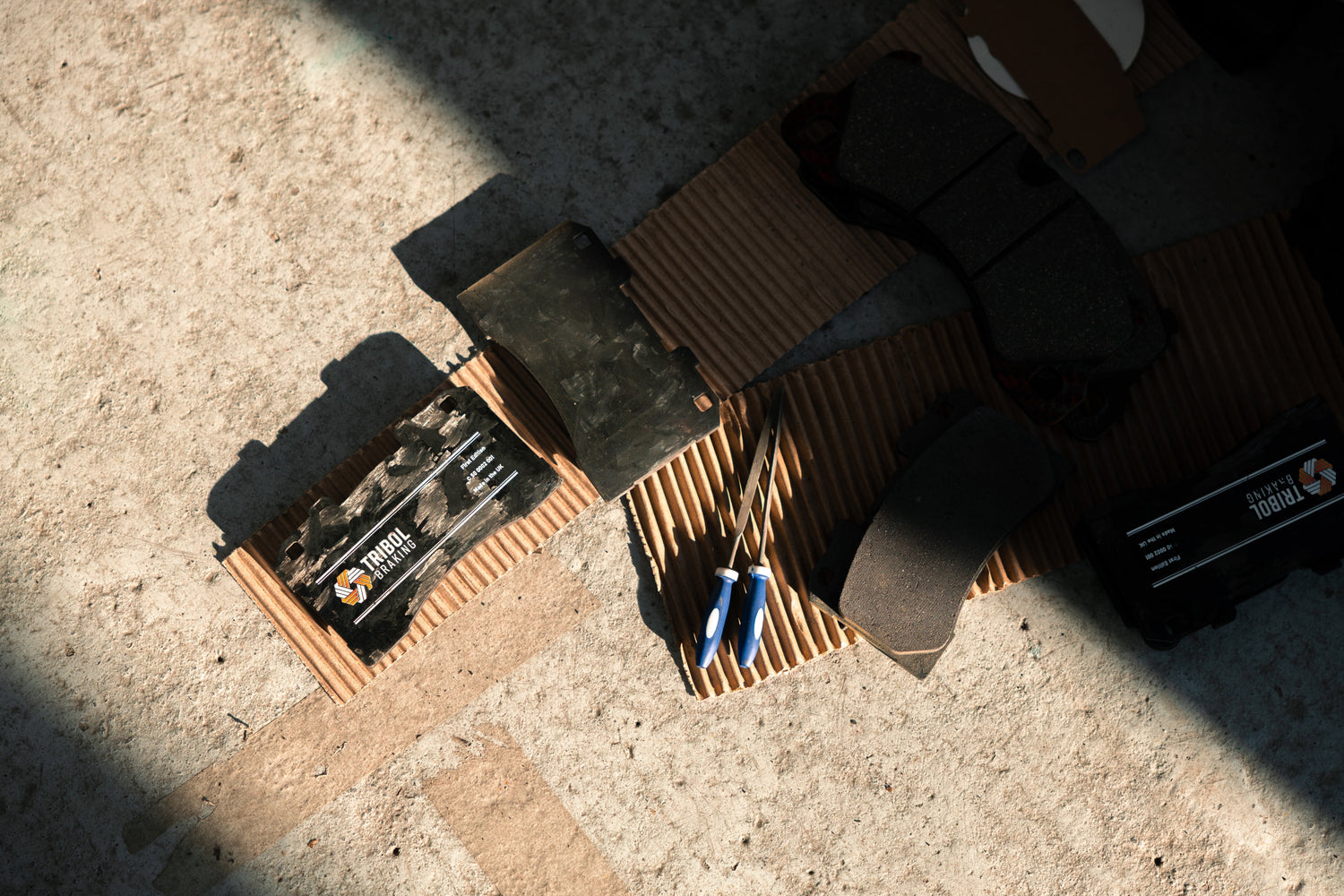
At Tribol we have chosen the best of both worlds, i.e. semi-metallic pads. These combine the high-performance metallic components of a sintered pad with a high temperature resin binder, resulting in
- next to zero compound fade
- extreme pedal consistency
- an affordable price point

Semi metallics comprise some of the most popular track and race compounds in the motorsport scene, from Ferodo's DSUNO to Pagid’s RSL 1, and our pads are designed to compete with the best.
Sign up now to be at the front of the queue when our pads drop this summer!
About the Author
Dr Sam Erland
CEO & Co-founder, Tribol Braking
Dr Sam Erland is the CEO and Co-founder of Tribol Braking. With over a decade of experience in the composites industry, Sam has worked across both aerospace and automotive sectors, specialising in the practical challenges of manufacturing advanced composite materials at scale.
His background sits at the intersection of materials engineering and real-world application – bridging the gap between what composites can do in theory and what they can deliver in demanding environments.
That focus ultimately led to the creation of Tribol Braking, where Sam applies his expertise to bringing high-performance composite solutions into braking systems – an area long dominated by conventional steel.



Leave a comment
All comments are moderated before being published.
This site is protected by hCaptcha and the hCaptcha Privacy Policy and Terms of Service apply.