

Every motorsport enthusiast knows weight matters - but it’s not just how much weight your vehicle carries, it’s where that weight sits that defines performance.
Most conversations focus on centre of gravity but there’s another factor that often gets overlooked: what Is the difference between sprung and unsprung mass? The answer might be simple, but the implications for vehicle handling are substantial
Sprung Mass
This is the portion of the vehicle supported by the suspension system, including:
- Chassis
- Bodywork
- Engine
It is “sprung” because it’s isolated from direct road input and travels on a 'smoothed' path.
Unsprung Mass
This includes components not supported by the suspension, such as:
- Wheels
- Tyres
- Hubs
- Brake components
These parts move directly with the road surface reacting to every bump, ripple, and imperfection. As a result, weight saved on this side of the suspension can have up to 10x the impact of weight saved from sprung components.
Why Unsprung Mass Matters More Than You Think
Simply put - because unsprung mass must move with the road, it has to move more, and the heavier it is, the harder it is to do this.This makes it harder for tyres to maintain consistent contact, leading to:
- Reduced suspension responsiveness
- Lower mechanical grip
- Decreased braking efficiency
- Less driver confidence
Reducing unsprung mass improves how quickly the suspension can react and how effectively the tyre stays planted. The benefits are immediate:
- Better grip under load
- Improved stability through corners
- Faster suspension response
- More consistent braking performance
If you can control the weight at the wheel, you can control how the car connects to the road.
Where You Can Make the Biggest Gains
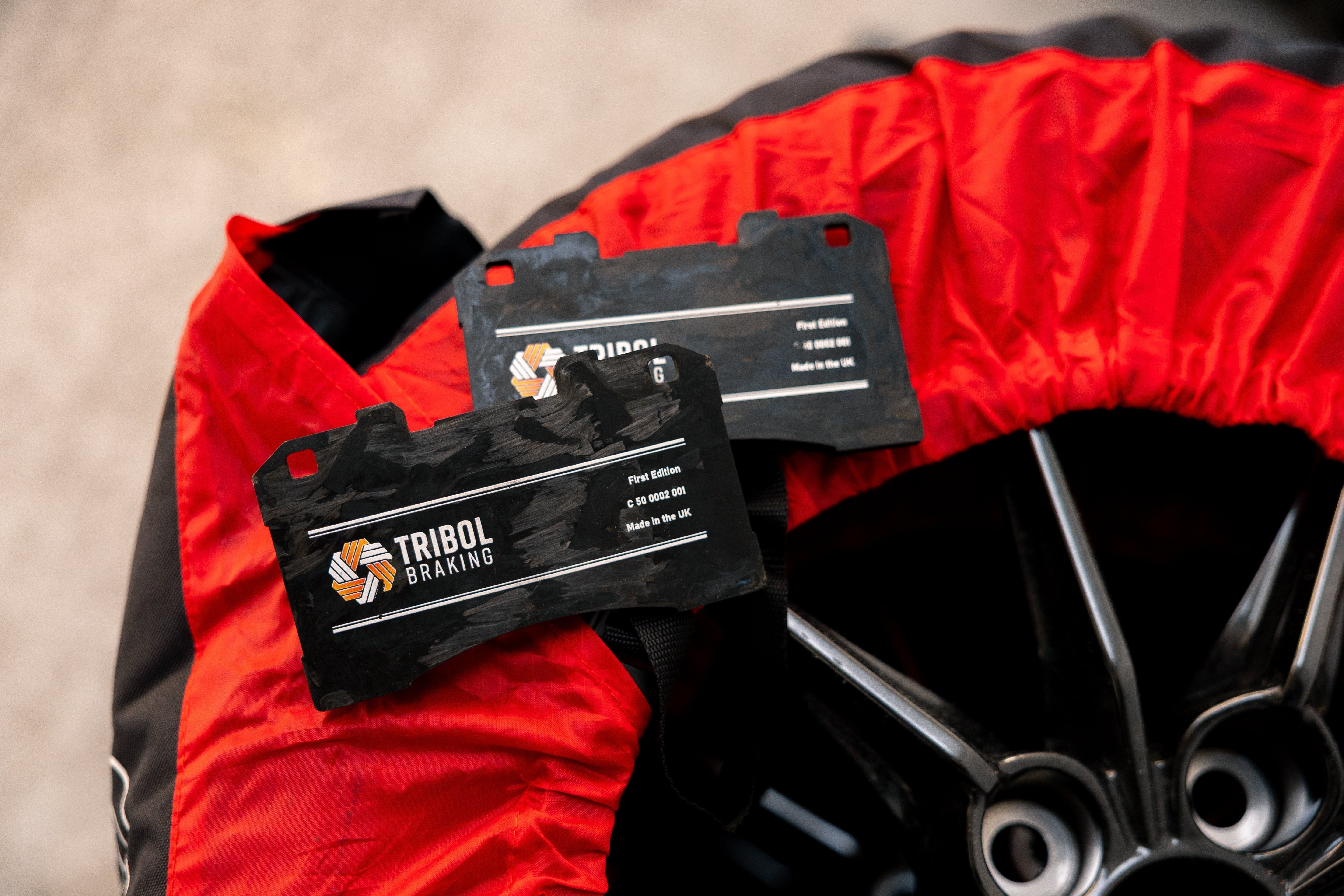
One of the most effective, and often overlooked, opportunities lies in the braking system. Brake components make up a significant portion of unsprung mass, meaning weight reductions here deliver outsized performance gains. Using advanced materials in brake components can deliver meaningful improvements in handling, not just in fade prevention.
Simply changing to Tribol's ColdForge Carbon Fibre CF-3 pads can save 1kg of unsprung mass per axle, improving responsiveness across the entire system with a straightforward pad swap - sign up now to be at the front of the queue when our pads drop this summer.
About the Author
Edward Lewis
Project Engineer, Tribol Braking
Ed is a Project Engineer at Tribol Braking, contributing to the development, prototyping, manufacturing, testing and validation of composite backing plate brake pad technology. He graduated with First Class honours in Automotive Engineering from the University of the West of England, where his dissertation focused on battery design for a hybrid Formula Student vehicle, maintaining cell temperatures through thermal optimisation and coolant management.
Edward has experience as a vehicle and powertrain engineer, working with OEMs on GT4 race cars, restomods, continuation vehicles and IVA programmes. He has also contributed to the design of high-voltage powertrains for advanced hypercar applications, utilising innovative materials.


Leave a comment
All comments are moderated before being published.
This site is protected by hCaptcha and the hCaptcha Privacy Policy and Terms of Service apply.