
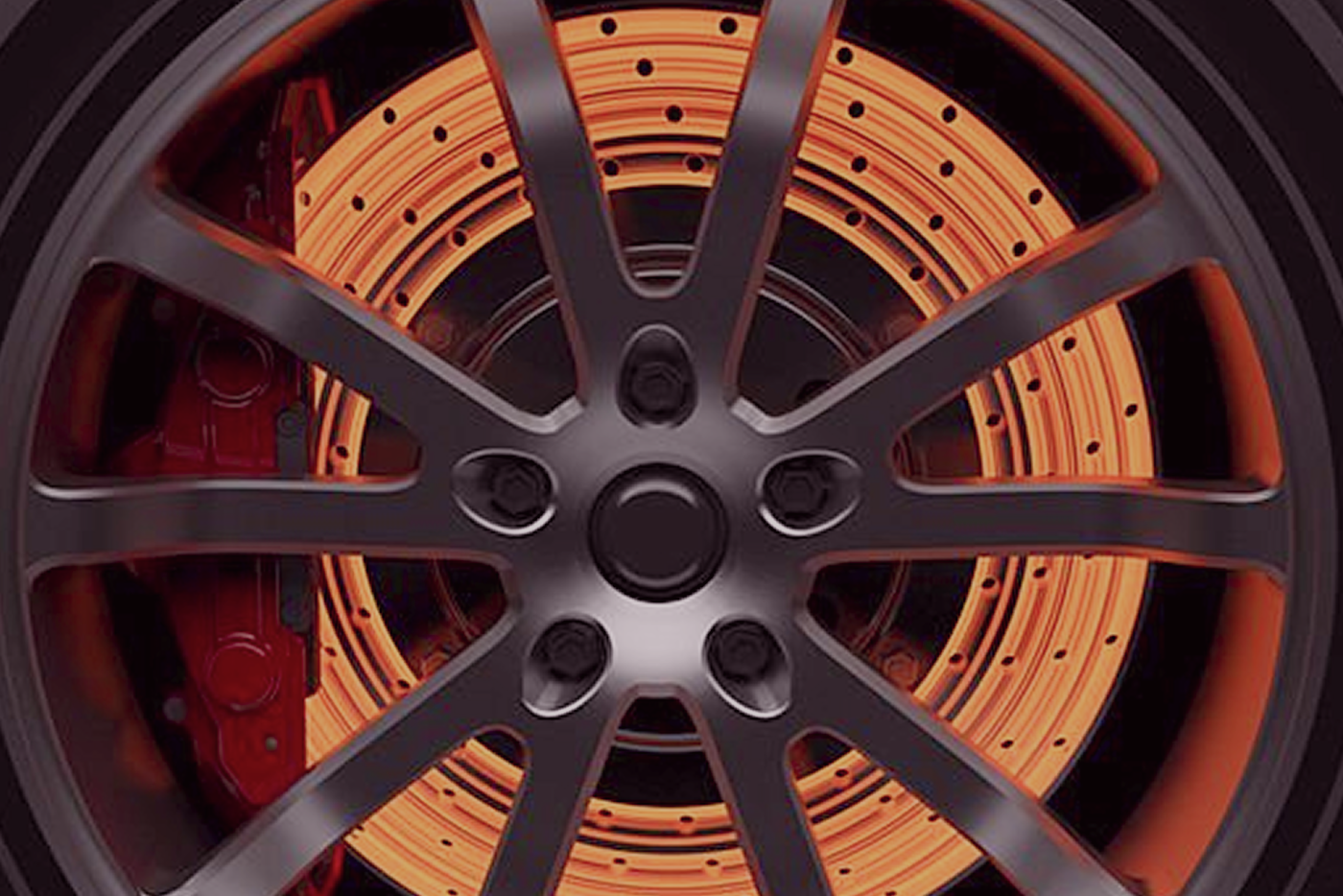
Heat in Brakes - A Fundamental Problem
High temperatures are an inevitable consequence of heavy braking – especially on track. When braking systems are pushed hard, excessive heat can quickly become the limiting factor, leading to issues ranging from brake fade to brake fluid boil.
The issue is, you can never escape heat in brakes! Friction brakes fundamentally operate by converting kinetic energy into thermal energy, so the challenge isn’t generating less heat – it’s controlling where that heat goes.
If your system isn’t correctly specified, a single hard session can be enough to end your day early. That being said, different components within a braking system absorb and transfer heat in very different ways, so controlling where your heat ends up can allow you to get the most out of your setup.
Brake Fluid Boil - The One to Avoid
One of the most critical – and dangerous – failure modes is overheating your brake fluid. This initial can feel like fade, with the pedal going long and 'spongy', but can progress to a total loss of braking.

This occurs when excessive heat is conducted from the pad–disc interface, through the backing plate and into the caliper. If the brake fluid reaches its boiling point – typically 190–270°C for DOT 5.1, depending on age and condition – braking force can drop off almost instantly.
Because calipers are heavy components with limited airflow, heat tends to linger. In many cases, the only solution is a complete cooldown before driving can safely resume.
Compound Fade: More Common, More Manageable
Compound fade, while frustrating, is generally less severe. This occurs when excessive temperatures at the pad–disc interface cause the friction compound to outgas. These gases form a thin boundary layer that slightly lifts the pad away from the disc, reducing braking effectiveness.

Most performance brake pads are scorch-treated or bedded-in to remove these gases before use, significantly reducing fade during operation. When fade does occur, it can usually be managed with cooling laps and airflow.
Keeping Heat Where it Belongs
So how does Tribol Braking address these challenges? The key is stopping heat from travelling to where it causes the most harm. Tribol’s patented composite backplate acts as a highly effective thermal barrier, dramatically reducing heat transfer into the caliper. Our composite material is:
- Over 100× less thermally conductive than mild steel
- Over 10× less conductive than Grade 5 titanium
This keeps heat concentrated at the disc – where it can be dissipated efficiently – rather than soaking into the caliper and brake fluid.

But what about compound fade? Well, Tribol brake pads are paired with a high-performance friction compound engineered for:
- Low fade
- High thermal stability
- Consistent friction across repeated hard stops
Every pad is scorch-treated and track-ready, delivering predictable braking performance from the first session to the last lap - sign up now to be ahead of the curve on the latest info and pad releases.
About the Author
Dr Sam Erland
CEO & Co-founder, Tribol Braking
Dr Sam Erland is the CEO and Co-founder of Tribol Braking. With over a decade of experience in the composites industry, Sam has worked across both aerospace and automotive sectors, specialising in the practical challenges of manufacturing advanced composite materials at scale.
His background sits at the intersection of materials engineering and real-world application - bridging the gap between what composites can do in theory and what they can deliver in demanding environments.
That focus ultimately led to the creation of Tribol Braking, where Sam applies his expertise to bringing high-performance composite solutions into braking systems - an area long dominated by conventional steel.

Leave a comment
All comments are moderated before being published.
This site is protected by hCaptcha and the hCaptcha Privacy Policy and Terms of Service apply.