

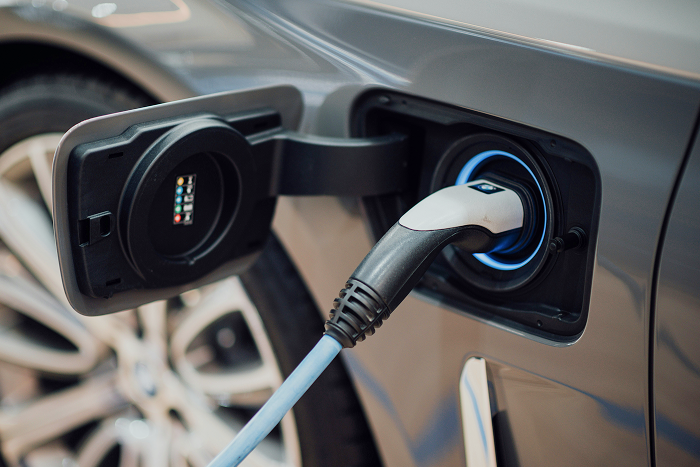
Reducing the carbon footprint of automated transportation has been at the forefront of development goals and legislation in the automotive industry for the past decade, with the rapid evolution of electric vehicles being the most obvious outcome. Building on this, numerous OEMs are looking to go one step further, and target full carbon neutrality from cradle to grave, requiring the rethinking of materials, processes and performance across the whole sector.

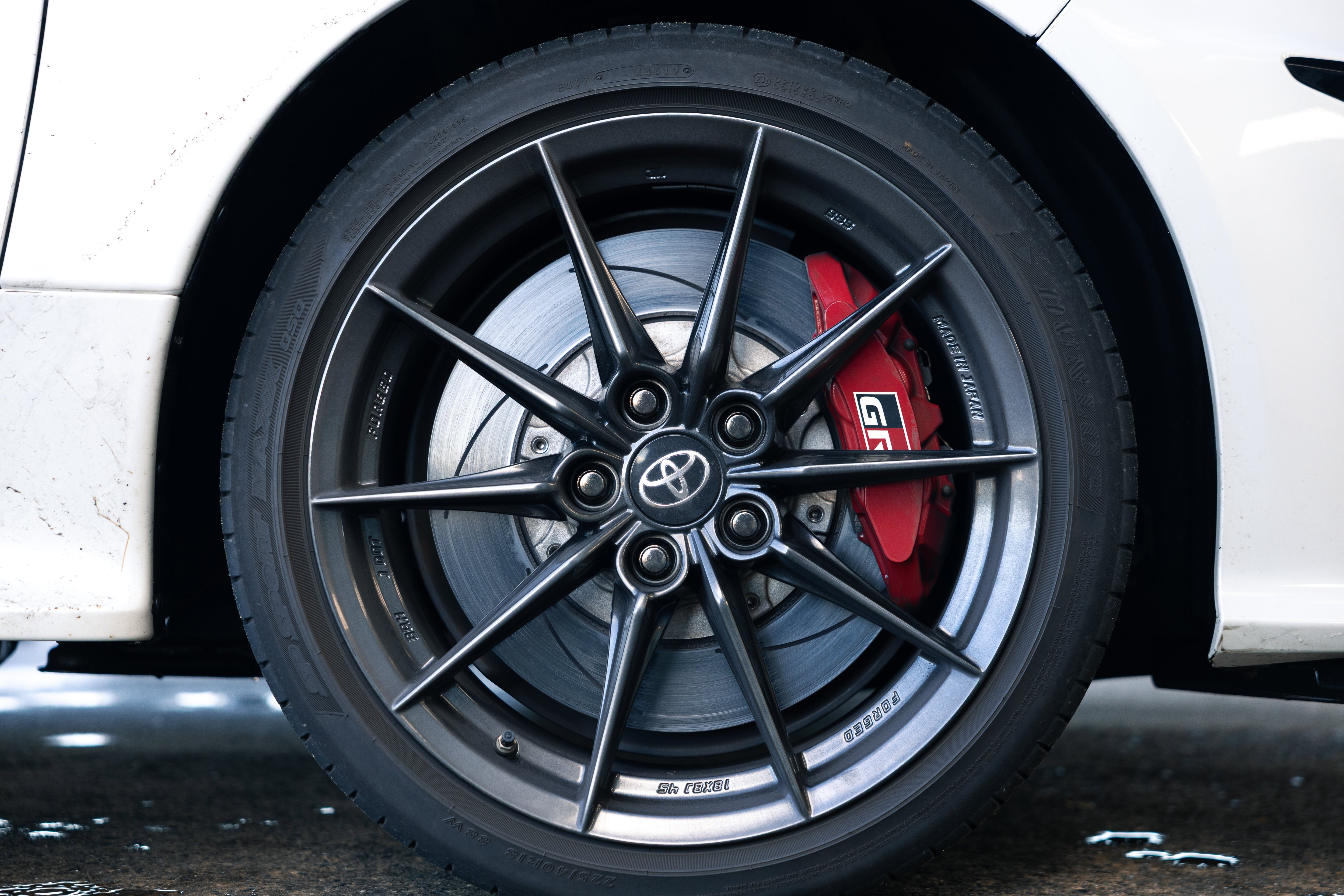
At the heart of it, reducing the carbon footprint of a manufactured component is perhaps better viewed as improving its efficiency – from the way it is made, to the materials it is made from, to how it performs in service, to how it is disposed of. So, reducing the lifetime CO2e of any component should be a challenge any engineer would leap at – and composite backed brake pads are a prime opportunity.
Carbon and glass fibre composites are often unjustly considered ‘dirty’ materials when it comes to the CO2e embodied in their production, but it is important to consider that, while they absolutely lose out to most metals on a kilo-by-kilo basis (e.g. 3.19CO2e/kg for mild steel vs. 54CO2e/kg for a pre-impregnated carbon fibre composite [1]), the fundamental principle is that you use substantially less weight of material to achieve the same performance.

A recent study by Tribol Braking based on our manufacturing processes and using the EuCIA Eco Impact Calculator [2-6] suggests even our highest performance carbon fibre backplate has only a marginally higher CO2e throughout production than that of a steel backed brake pad. This downside is dramatically overshadowed by the service life saving through weight reduction on a vehicle, with predictions indicating a reduction of over 70% in CO2e compared to a similar steel backed component over a 43,500-mile lifespan thanks to the reduction in component weight [4].
Importantly, investigative testing at Tribol suggests that, for an everyday passenger car application, carbon fibre reinforcement may be less necessary if at all. A well-engineered, full glass backplate offers a massive potential reduction in CO2e of 74% compared to the incumbent technology on a pad-to-pad basis, but this comparison is again only the tip of the iceberg.
Anecdotal evidence with electric vehicles suggests that pad replacement may no longer necessary as a result of compound wear [7] (thanks to regen braking shouldering 95% of the braking cycle) but is rather becoming a time gated maintenance requirement to safeguard against pad seizure or delamination as a result of corrosion of the mild steel backplate [8]. Whilst long term testing would be required for full confirmation, the technical invulnerability of a fibre glass phenolic composite to these forms of corrosion could well be the catalyst to unlocking a ‘brake pad for life’…
[1] "CarbonCloud" Emissions hub website calculations for rolled plate steel at 3.19Kg CO2e/Kg
[2] EuCIA (European Composites Industry Association) Eco Impact Calculator - Independently created by Ernst and Young. Eco report composite backing plate 11/11/2024
[3] Weise, IF et al, "Model Calculation of CO2 Emissions Saving Potential for Fine Blanking of Inductively Heated Sheet Metal with Comparison of the Product Variants", Manufacturing Driving Circular Economy: Proceedings of the 18th Global Conference on Sustainable Manufacturing, October 5-7, 2022, Berlin / edited by Holger Kohl, Günther Seliger
[4] Based on 100Kg wt. saving giving da reduction of 9g CO2e/km driven, and Avg. brake pad life of 70K Km. Luk J.M, et al, "Review of the Fuel Saving, Life Cycle GHG Emission, and Ownership Cost Impacts of Lightweighting Vehicles with Different Powertrains", Environmental Science & Technology, Cite this: Environ. Sci. Technol. 2017, 51, 15, 8215–8228
[5] Berkay A. et al, "Comparative LCA Study of Brake Lining Mixes with Recycled Material" commissioned by RMS. Aug. 2022. LCA deemed in accordance with the international standards for LCA (ISO 14'040 and 14'044) and the panel is therefore in favour of and supports the publication of this attributional LCA study comparing different types of brake lining materials used in the automotive industry.
[6] European Circular Economy Stakeholder Platform, (EuRIC) Metal Recycling Factsheet, using steel scrap in the production process reduces CO2 emissions by 58%
[7] https://www.r1concepts.com/blog/ev-brake-rotor-corrosion/?srsltid=AfmBOopDoc1NoAD3jyqss5Ylht1-5tVr4DyVwdGHApEJwlXpjuxApQhs
[8] https://www.randautomotive.com/blog-copy/dont-skip-ev-brake-maintenance-how-to-keep-your-electric-vehicle-safe-and-reliable
About the Author
Dr Sam Erland
CEO & Co-founder, Tribol Braking
Dr Sam Erland is the CEO and Co-founder of Tribol Braking. With over a decade of experience in the composites industry, Sam has worked across both aerospace and automotive sectors, specialising in the practical challenges of manufacturing advanced composite materials at scale.
His background sits at the intersection of materials engineering and real-world application – bridging the gap between what composites can do in theory and what they can deliver in demanding environments.
That focus ultimately led to the creation of Tribol Braking, where Sam applies his expertise to bringing high-performance composite solutions into braking systems – an area long dominated by conventional steel.

Leave a comment
All comments are moderated before being published.
This site is protected by hCaptcha and the hCaptcha Privacy Policy and Terms of Service apply.