

Carbon ceramic (C/SiC) brake discs have been around since the 1990s, first appearing on the Mercedes-Benz C215 Coupe F1 edition, follow by the release of the Porsche Ceramic Composite Brake (PCCB) as an option on the 996 GT2 in 2001. C/SiC technology is now commonly available option for almost every performance focused high end car, and the technology has recently been homologated on at least several platforms such as the Porsche GT3 RS. But what do they actually do for you which grey cast iron does not?
Perhaps the most immediately obvious attribute of a C/SiC disc is its eye watering cost, although there are a number of good reason for this; they are made in very low volumes (relative to cast iron discs at least), their components are comparatively exotic - including materials such as carbon fibre and, fundamentally, because the manufacturing process is extremely complex, involving many steps over a long time requiring a lot of energy.
C/SiC discs are created from layers of carbon fibre veils, compressed together and carbonised at around 1000oC. These raw discs are then put in a gas-filled furnace and “densified”, where gaseous carbon and Silicon compounds are deposited within the carbon structure – this process taking several weeks or months. This operation fills the pores in the discs with carbon, free silicon and silicon carbide. The discs are then “graphitized” involving a further heat treatment at 3000oC. Alternative routes have been developed but all are time consuming and very expensive.
Since the early days, these brake discs have been developed into low wear, high friction products and a range of brake pads have been developed to run against C/SiC, which need to cope with the heightened running temperatures expected in these materials compared to conventional iron discs - more about that later.
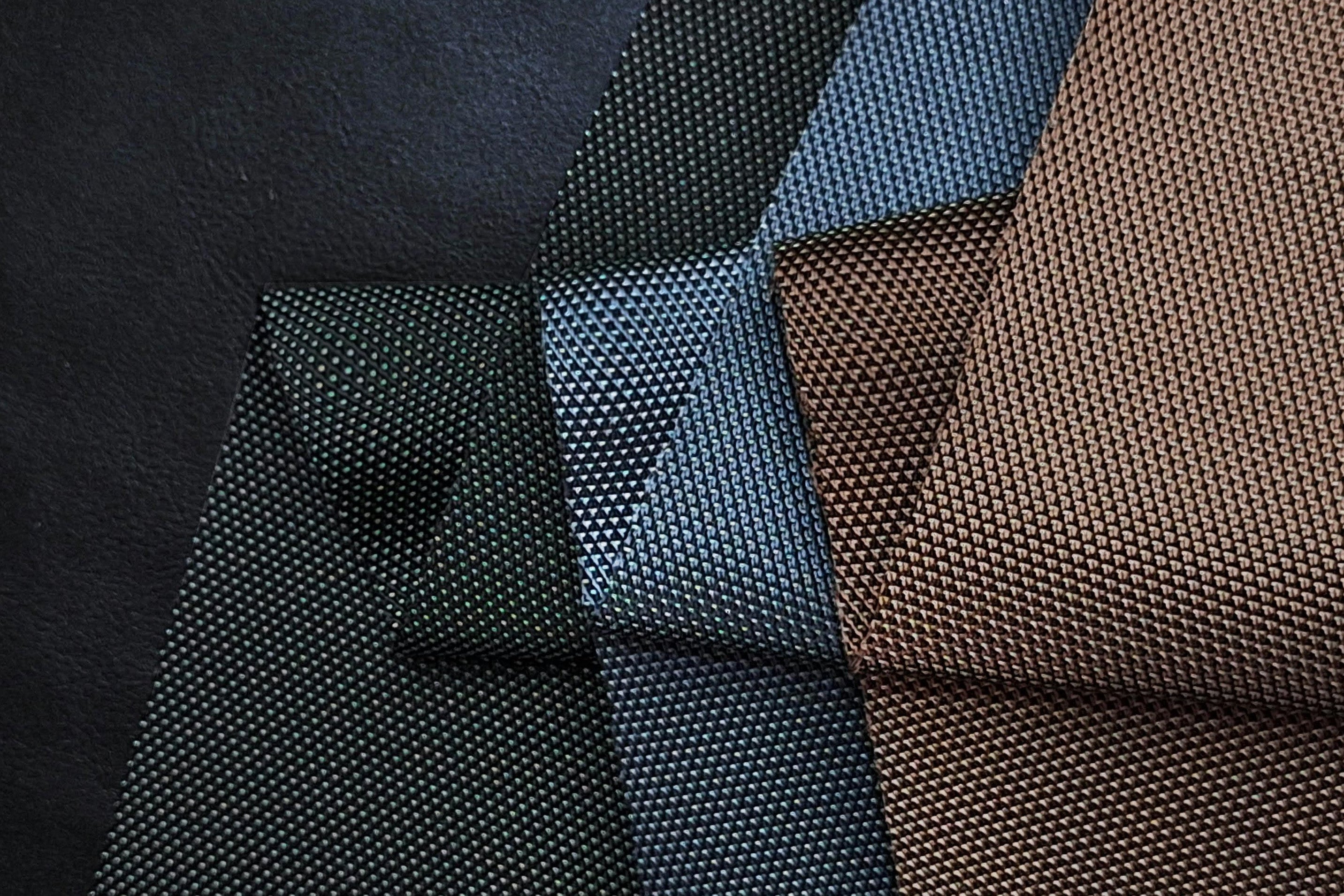
In terms of properties, C/SiC discs differ significantly from the far cheaper cast iron discs they often replace. The most immediate and obvious properties are colour (black like F1 discs) and weight (C/SiC is around 1/3 the density of cast iron). Thermal properties are more hidden of course, but while room temperature thermal conductivity (i.e. the speed at which heat moves through a material) is similar for both (50 W/mK axially), it is much higher for C/SiC circumferentially. Specific heat capacity (i.e. the amount of thermal energy required to change the temperature of 1kg of a material by 1oC) is however markedly different, at 460 J/Kg/K for cast iron at room temperature and around 680 J/Kg/K for C/SiC.
What is often forgotten is that these properties change significantly as frictional heating increases. Thermal conductivity decreases and specific heat capacity rises, meaning that heat can get trapped at the friction interface. This is not what you really want in a brake because concentrated thermal energy at the disc surface is the enemy of the friction coefficient in extreme stops. It follows that starting with as high a room temperature thermal conductivity as possible is super important in the process of shifting that heat away from the disc surface and into the disc. Comparing the two materials, both Iron and C/SiC are pretty efficient at achieving fast heat transfer compared to say, stainless steel that has roughly half as high a thermal conductivity, restricting their use to motorbikes.
Now to Specific Heat Capacity (SHC). C/SiC seems to have an obvious advantage as has a higher SHC. Put another way, 1kg of C/SiC material can contain around 1/3 more heat before it rises by 1 degree than iron. But it is far more complicated than this. What is often overlooked is the real-world, component level situation, where C/SiC discs are typically half as many Kgs than equivalent iron discs. There are of course other factors to consider, such as how effective each technology is at passing heat to the real heat sink - the air passing through the middle of the disc, which will effect the rate of disc temperature rise over successive stops, but, fundamentally, nothing gets away from the fact that iron discs have more “kgs” for the heat to be shared around in. So… which material would run cooler?
Aside from all the hearsay, marketing and manufacturers claims, what does the science show? Well, the situation is complex and lends itself to Finite Element Modelling, which some have tried [1]. This study considered like-for-like performance and braking applications on unvented brake discs made of iron and C/SiC, where peak temperatures in the carbon disc ran 111oC higher. But what about the effect of venting? The study results showed an even starker difference, with C/SiC running close to 200oC hotter than equivalent iron discs, due to C/SiC being worse at dumping its heat into the atmosphere.
So, what does this say about C/SiC as a superior brake technology? The impressive sight of C/SiC discs glowing red down at the track and boasts in the pub of disc temperatures hitting 900oC are often thought to show that C/SiC technology enables effective braking at higher temperatures, but the preceding arguments suggest that this ain’t necessarily so. Simply put, iron discs can keep brake temperatures lower for the same amount of braking (heat input), meaning - less brake fade. The analysis does bring into question some of the marketing claims that C/SiC brakes “cannot be cooked”, a claim famously undermined by Top Gear’s Jeremy Clarkson driving a Lamborghini Aventador at Imola with carbon ceramic discs, where overheating and fade was apparent – at the bare minimum, they can’t stop heat getting to your brake fluid. The reality is that the reduced fade profile is typically down to the semi-metallic nature of the pads run against them, an attribute discussed in this article, and is something which can be achieved by running any semi-metallic or sintered compound against a simple grey cast iron disc.
There is then the argument that C/SiC discs are “for life” with very low wear, however this is often disputed, where C/SiC discs routinely need re-machining or replacement, particularly when driven at low speeds. Entire businesses operate purely to refurbish worn discs – so they clearly aren’t that low wear!
They are of course lighter, representing significant savings on crucial and hard to reduce unsprung weight, in turn giving handling and cornering advantages, but the cost is terrifically high - surely there are cheaper ways of achieving that in your braking system…
[1] Mohammad Tauviqirrahman, M. Muchammad, Tian Setiazi, Budi Setiyana, J. Jamari, Analysis of the effect of ventilation hole angle and material variation on thermal behavior for car disc brakes using the finite element method, Results in Engineering, Volume 17, 2023. 100844, ISSN 2590-1230, https://doi.org/10.1016/j.rineng.2022.100844. (https://www.sciencedirect.com/science/article/pii/S259012302200514X)
About the Author
Dr Luke Savage
CTO & Co-founder, Tribol Braking
Dr Luke Savage is the CTO and Co-founder of Tribol Braking, bringing deep technical expertise in braking systems, friction materials, and high-temperature performance.
Luke’s career began with a PhD focused on “High Temperature Properties of Automotive Friction Materials”, and has since included managing over 20 successful Innovate UK-funded projects spanning materials science, braking technology, and automotive engineering.
The research underpinning Tribol Braking originated from one of these programmes, providing the foundation for the company’s composite brake technology. Luke continues to lead Tribol’s technical direction, ensuring every product is grounded in validated science, rigorous testing, and real-world performance.


Leave a comment
All comments are moderated before being published.
This site is protected by hCaptcha and the hCaptcha Privacy Policy and Terms of Service apply.